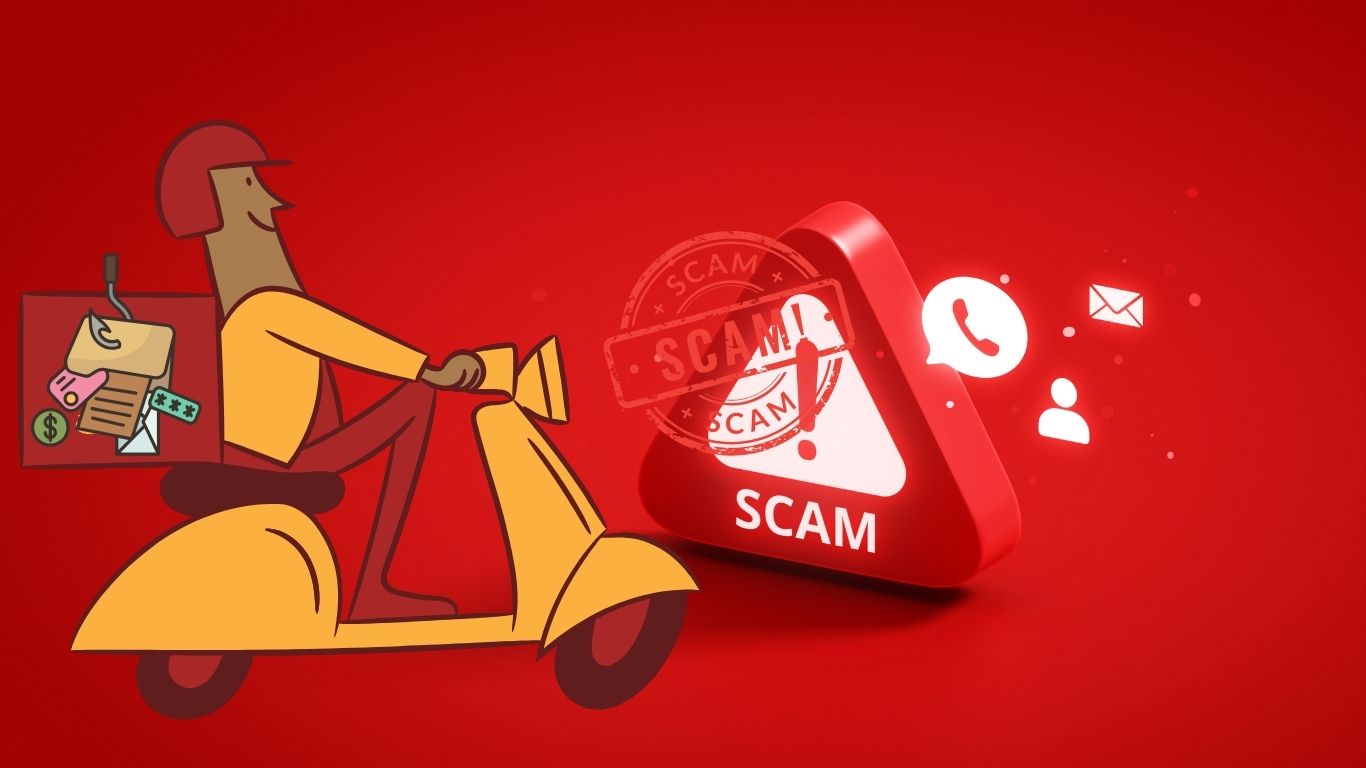
As online shopping and home delivery have become increasingly popular, a new type of cyber fraud is rapidly spreading across Indian cities and towns the Delivery Boy/Courier Scam. In this scam, fraudsters impersonate delivery partners, company representatives, or courier boys to trick people into parting with money, bank details, and even OTPs (One-Time Passwords).
We spoke to cyber cell officials, victims, and digital fraud experts across the country to understand the latest methods used in this scam and how to protect yourself from it.
- Facebook Account Security: Click Here
- What is a Cyber Attack? : Click Here
How Does Delivery Boy Scam Work?
Fraudsters are now even copying the uniforms, ID cards, and mobile apps of real delivery drivers. They obtain information such as your address and order details beforehand to make the scam seem completely legitimate.
1. “COD Refund” or “Extra Charges” Scam
The scammers come to your house and say:
“There are extra charges on your package, please make the payment.” They show a QR code for payment, which, when scanned, can drain your entire bank balance.
2. Fake Delivery Attempt Call
Scammers call and say:
“Your order is at your doorstep, but you need to verify the OTP or link.” Clicking on the link leads to your data being stolen.
3. Wrong Package Scam
They deliver a fake package instead of the actual one and say:
“This is a prepaid order, please confirm the payment first, then check the package.” The package contains some cheap item.
4. Courier Return/Fee Scam
A person from a fake courier agency calls:
“Your parcel has been held up; there will be a charge of ₹50–₹200 to release it.” Paying a small amount seems easy, but clicking on the link leads to bank fraud.
5. OTP / KYC Verification by Courier Boy
Some scammers come to your house and ask for an OTP in the name of Aadhaar/ID verification, which can lead to your WhatsApp, UPI, or bank account being hacked.
Why Do People Get Trapped?
- Don’t assume there’s no danger from a real delivery boy.
- Avoid scanning QR codes in a hurry.
- Don’t ignore charges for “small amounts.”
- Confusion due to the daily influx of parcels.
Retail experts say this scam is becoming more prevalent as people increasingly adopt cashless payments.
How to Protect Yourself?
1. Never pay the delivery boy by scanning a QR code. Legitimate companies do not charge via QR codes.
2. Never share your OTP under any circumstances. The OTP for delivery is only for package receiving and is displayed in the app not on your phone.
3. Do not click on any links. Courier companies do not send SMS or WhatsApp links.
4. Do not pay without opening and checking the package. If the company offers “Open Box Delivery,” check the package first.
5. Call the company immediately in suspicious situations. Get the real customer service number directly from the company’s website, not from Google.
6. Keep a recording of the interaction. If you have any doubts, record the delivery boy’s conversation and ID.
What to do Immediately if You’ve Been Scammed?
- Immediately call your bank/UPI provider to stop the transaction.
- File a complaint on 1930 (National Cybercrime Helpline).
- Register a case on cybercrime.gov.in.
- Keep all proof call recordings, videos, SMS messages everything.
What Do the Victims Stories Reveal?
Many victims reported that the scammers spoke in a very professional manner. In some cases, they even used the name, logo, and app of a real courier agency. This is why people handed over the money without any suspicion.
Conclusion
The Delivery Boy/Courier Scam is a side effect of the rapid spread of new technology and the delivery culture in India. This scam may seem very simple, but it can have a huge impact from emptying bank accounts to identity theft.
Caution is the only solution: Do not scan QR codes, do not open links, do not share OTPs this is your strongest defense.